
€ 45,00
Free shipping in Austria on orders over € 80
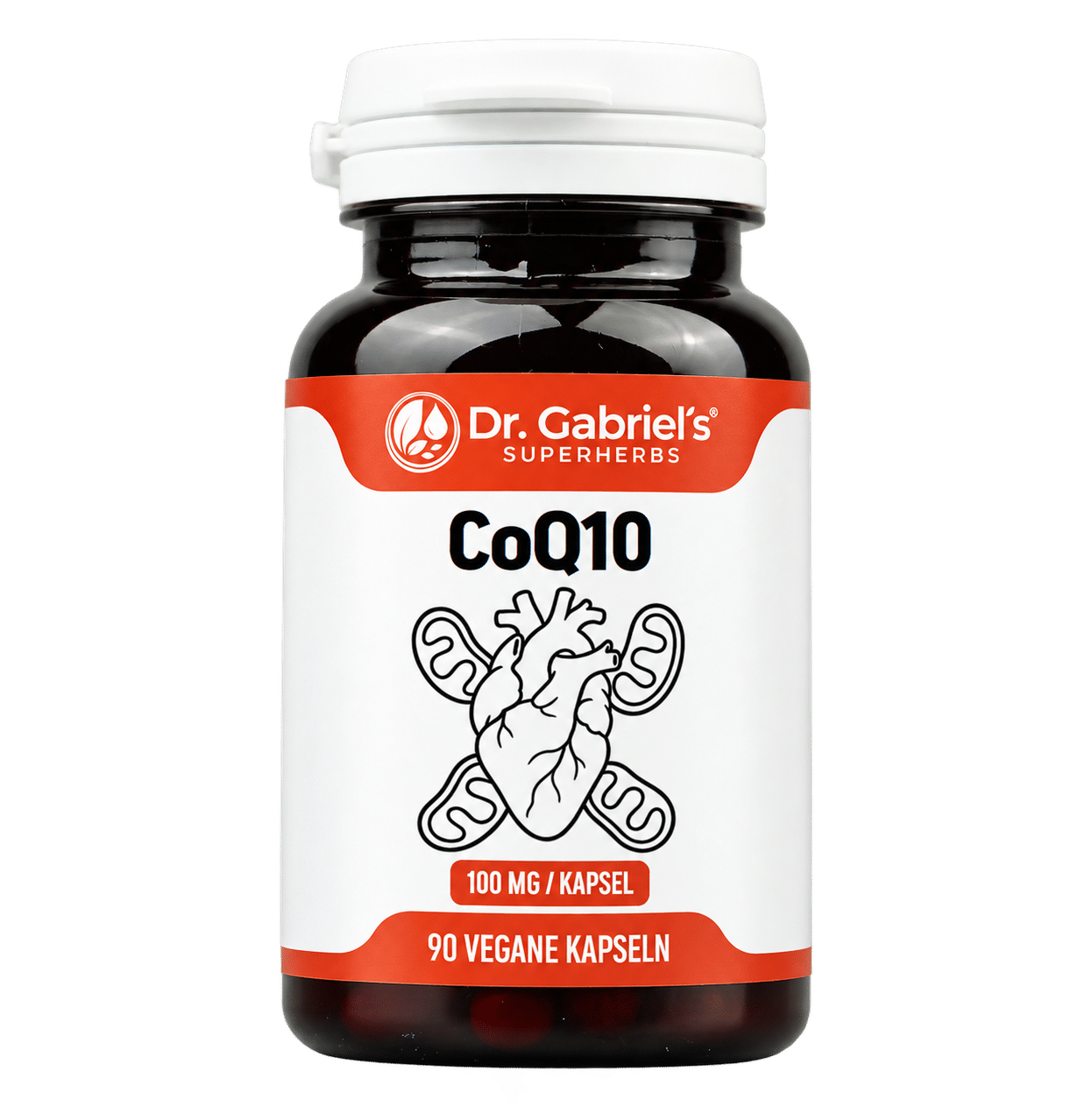
Dr Gabriel’s® Coenzyme Q10 delivers 100mg of Ubiquinone — the natural, bioactive form of CoQ10 — in every vegan capsule. CoQ10 is a molecule found in every cell of the human body, playing a central role in mitochondrial energy production and cellular antioxidant protection.
Natural CoQ10 levels are known to decline progressively with age — by an estimated 30% between the ages of 40 and 60. This makes CoQ10 supplementation particularly relevant for adults in midlife and beyond who wish to support their natural energy metabolism and cardiovascular vitality.
90 vegan HPMC capsules — no gelatin, no artificial additives. Clean formula, precision dosing, 60-day money-back guarantee.
⚠️ Disclaimer: This product is a food supplement and not a substitute for a varied diet and a healthy lifestyle.
Coenzyme Q10 — also known as CoQ10, Ubiquinone, or simply CoQ — is one of the most fundamentally important molecules in human physiology. Present in every cell of the body, CoQ10 functions as a critical component of the mitochondrial electron transport chain: the biochemical pathway through which cells generate ATP, the primary fuel source for virtually every biological process in the human body.
Unlike many supplements that introduce external compounds, CoQ10 is a molecule your body already produces — and relies upon. The critical issue is that natural endogenous CoQ10 production declines significantly with age. Research indicates a reduction of approximately 30% between the ages of 40 and 60, precisely the period of life when sustained energy, cardiovascular efficiency and cellular resilience become most important.
Dr Gabriel’s® Coenzyme Q10 delivers a clean, 100mg Ubiquinone dose per vegan capsule — supporting your body’s natural energy metabolism pathways with the form of CoQ10 your cells already know how to use.
CoQ10 exists in two primary forms in the body, and understanding the difference helps you make an informed supplement choice:
| Property | Ubiquinone (this product) | Ubiquinol |
| State | Oxidised form | Reduced (active antioxidant) form |
| Body conversion | Converted to Ubiquinol after absorption | Pre-converted — ready for direct use |
| Absorption | Good — well-studied at 100mg dose | Higher bioavailability in older adults |
| Cost | More accessible — standard supplement form | Typically higher price point |
| Best suited to | Adults 18–55 with normal conversion capacity | Adults 55+ or those with conversion concerns |
| Research base | Extensive — decades of published clinical data | Growing, more recent evidence base |
Dr Gabriel’s® CoQ10 uses the Ubiquinone form — the most extensively studied and widely used CoQ10 form in the scientific literature, with a strong safety and efficacy record at the 100mg dose level.
Certain medicines, such as statins, act on the same metabolic pathway (the mevalonate pathway) that the body uses to produce its own CoQ10.
| ℹ️ Important: If you are currently taking prescription medications — including statins, anticoagulants or antihypertensive drugs — consult your physician or pharmacist before adding CoQ10 supplementation to your routine. This product is a food supplement, not a pharmaceutical intervention. |
| Component | Content per Capsule | Notes |
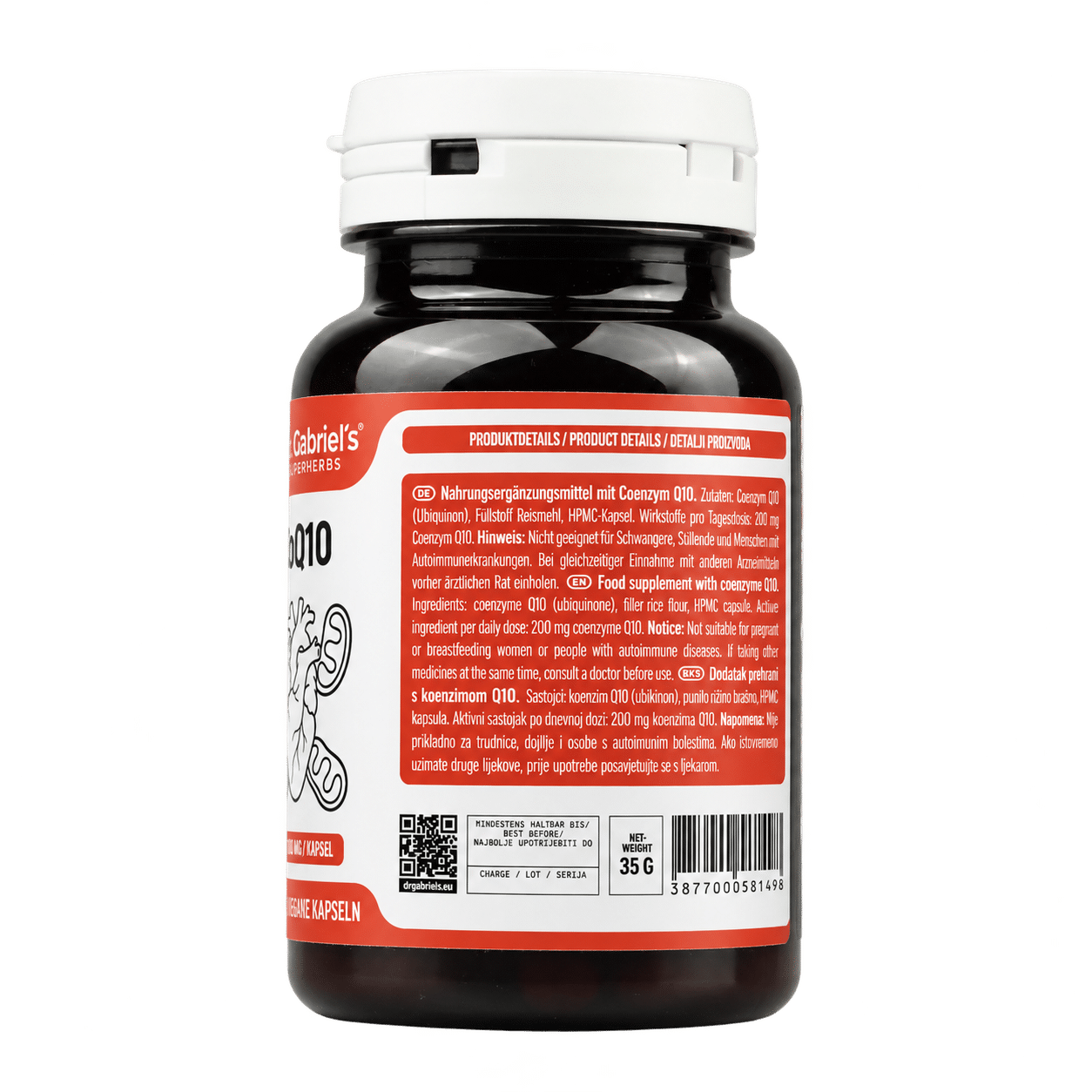
| Coenzyme Q10 (Ubiquinone) | 100 mg | High-purity CoQ10, oxidised form |
| Capsule shell | HPMC (vegan) | Hydroxypropyl methylcellulose — no gelatin |
| Fillers / additives | None | Clean formula — no binders, colours, preservatives |
| GMO / Gluten / Soy | None | BEZ GMO | BEZ GLUTENA | BEZ SOJE |
| Nutrient | Per 1 Capsule | % NRV |
| Energy | ≈ 1.35 kcal | < 1% |
| Protein | < 1% | — |
| Carbohydrates | < 1% | — |
| Fat | < 1% | — |
| Fibre | < 1% | — |
| Coenzyme Q10 (Ubiquinone) | 100 mg | * NRV not established |
| Group | Daily Dose | Timing | Duration / Supply Notes |
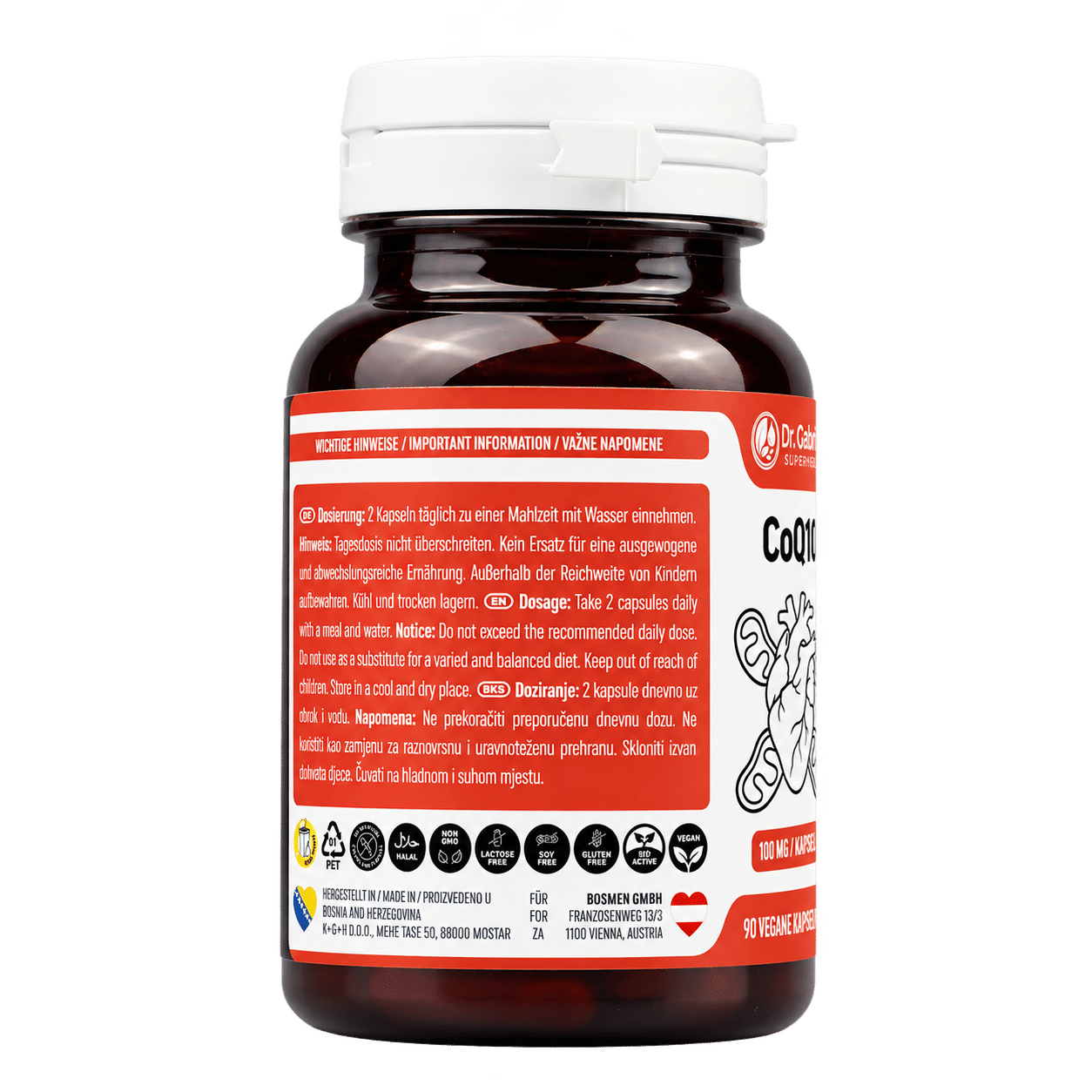
| Adults (18+) — standard | 1 capsule/day | With main meal (fat enhances absorption) | 90 caps = 90-day supply |
| Adults 50+ — enhanced | 2 capsules/day | Split: morning + evening meal | 90 caps = 45-day supply |
| Taking statins or other medication | Consult physician | — | Individual guidance required |
| Under 18 | Not recommended | — | Adults only |
| Pregnant / breastfeeding | Consult physician | — | Medical guidance required |
| Autoimmune conditions | Consult physician | — | Immunomodulatory effect — seek guidance |
Absorption tip: CoQ10 is fat-soluble. Taking your capsule with a meal containing healthy fats — such as olive oil, avocado, nuts or oily fish — significantly enhances bioavailability and absorption compared to taking on an empty stomach.
Coenzyme Q10 is a molecule found in every cell of the body, where it plays two primary roles: it is a critical component of the mitochondrial electron transport chain — the process through which cells generate ATP energy — and it functions as a fat-soluble antioxidant, protecting cells and mitochondria from oxidative damage. The heart, liver and kidneys contain the highest concentrations of CoQ10 in the body.
Ubiquinone is the oxidised form of CoQ10 — the standard supplement form with decades of research behind it. After absorption, the body converts Ubiquinone into Ubiquinol, the active antioxidant form. Ubiquinol skips this conversion step and may have higher bioavailability in older adults. For most adults under 55 with normal metabolic function, Ubiquinone at 100mg per day is well-absorbed and widely considered effective.
The body synthesises CoQ10 endogenously through a complex enzymatic pathway. This capacity naturally declines with age — research indicates a reduction of approximately 30% between the ages of 40 and 60. This makes CoQ10 supplementation particularly relevant for adults in midlife and beyond.
Statin medications work via the mevalonate pathway — the same pathway the body uses to synthesise CoQ10. For this reason, statin therapy is associated with reduced endogenous CoQ10 levels. Whether CoQ10 supplementation is appropriate alongside your specific statin regimen is a medical question best answered by your prescribing physician or pharmacist. Dr Gabriel’s® makes no medicinal claims — always consult your healthcare professional before combining supplements with prescription medication.
CoQ10 is fat-soluble, meaning it is best absorbed when taken alongside a meal containing healthy fats. The main meal of the day is generally the optimal timing. At a dose of 1 capsule (100mg) per day, a single daily dose is sufficient for most adults. At 2 capsules per day, splitting the dose between morning and evening meals can improve sustained absorption throughout the day.
| Health Goal | |
|---|---|
| Product Form | |
| Pack Size | |
| Target Group | |
| Vegan Certified | |
| GMO-Free | |
| Quality & Certifications | 60-Day Money-Back Guarantee, Gluten-Free, No Artificial Additives, Soy-Free |
| Daily Dose | 2 Capsules |
| Key Active Ingredient |


Reviews
There are no reviews yet.